

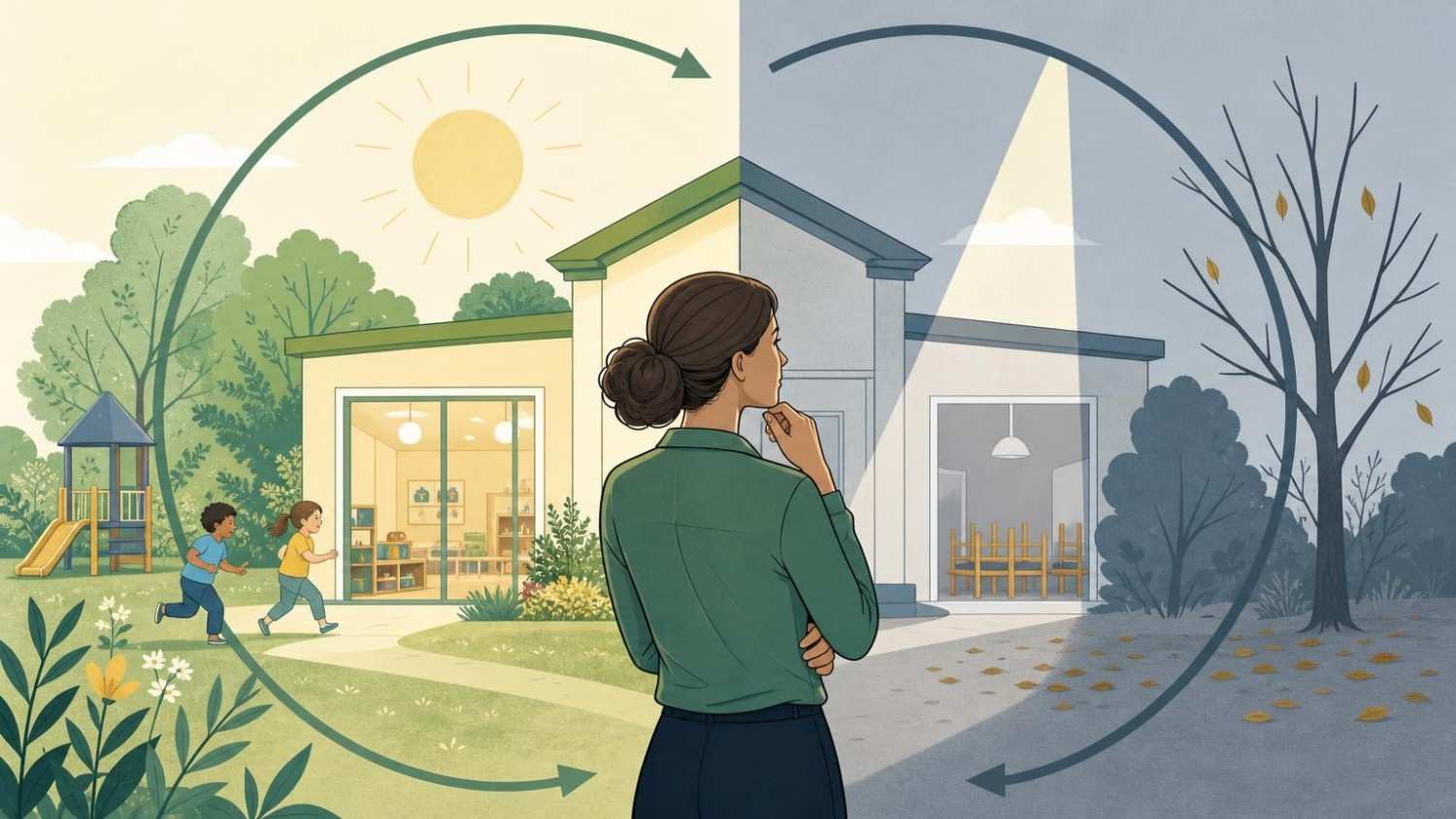
Every childcare center has them: a folder, spreadsheet, or CRM segment full of parents who once raised their hand, asked about enrollment, maybe even toured the facility, and then went silent. Life got busy. They found a temporary solution. Decision fatigue set in. Whatever the reason, these dormant leads represent real families who once had a genuine need, and many of them still do. The challenge is reigniting that conversation without coming across as pushy or irrelevant. A thoughtful re-engagement email strategy for dormant childcare leads can turn months-old inquiries into enrolled families, but only if you approach it with the right segmentation, messaging, and timing. Most centers either blast the same generic email to everyone or simply give up on old leads entirely. Both approaches leave money and relationships on the table. What follows is a practical, psychology-informed guide to winning back the parents who drifted away.
Segmenting Dormant Leads for Personalized Outreach
Before you write a single word of email copy, you need to sort your dormant leads into meaningful groups. A parent who inquired about infant care eighteen months ago is in a completely different headspace than one who asked about a pre-K program six months back. Treating them identically is the fastest way to get unsubscribed.
Segmentation is where most childcare centers fail because their CRM data is messy, incomplete, or never tagged properly in the first place. If that describes your situation, start with what you do have: the date of inquiry, the child’s age at the time, and the type of program they asked about. Even these three data points give you enough to send emails that feel personal rather than mass-produced.
Identifying Leads by Child’s Age and Developmental Stage
Children grow fast, and a lead that went cold eight months ago now has a child in a different developmental stage. This matters enormously for your messaging. A parent who asked about your toddler room when their child was 14 months old now has a two-year-old who may be ready for a structured preschool environment.
Pull your lead list and calculate each child’s current approximate age. Then group them into the developmental buckets that match your center’s programs: infant, toddler, preschool, and pre-K. Your email to a parent of a now-three-year-old should reference school readiness, socialization, and the cognitive leaps happening at that age. Your email to a parent of a 10-month-old should speak to separation anxiety (theirs, not the baby’s) and the benefits of early group care.
This isn’t just a marketing tactic. It signals to parents that you understand child development and that you’re paying attention to their family’s specific situation. That kind of attentiveness builds trust before they ever walk through your door again.
Categorizing Based on Previous Inquiry Type
Not every lead went dormant for the same reason, and the nature of their original inquiry tells you a lot about their decision-making process. A parent who filled out a general “request info” form is different from one who scheduled a tour and then ghosted.
Create at least three categories based on inquiry depth:
- Initial inquiry only: These parents were comparison shopping. They may have submitted forms to five or six centers simultaneously. Your re-engagement email should differentiate your center and give them a reason to look again.
- Tour scheduled but not completed: Something got in the way. Life, logistics, a sick kid. These leads are warmer than you think. A simple “we’d love to reschedule” message often does the trick.
- Tour completed, no enrollment: This is the most interesting group. They saw your center and didn’t commit. Your email needs to address potential objections: cost, waitlist timing, location, or program fit.
Tagging leads by these categories lets you craft messages that speak directly to where each parent stalled in their decision process.
Schedule a FREE 30 minutes Session with Us!
Crafting High-Impact Subject Lines for Busy Parents
Your subject line determines whether your email gets opened or buried under grocery delivery confirmations and pediatrician appointment reminders. Parents of young children receive an absurd volume of email, and their attention is fragmented by default. You have roughly 40 characters on a mobile screen to earn a tap.
The psychology here is straightforward: parents will open emails that feel relevant to their child’s immediate needs or that trigger curiosity about something they’ve been putting off. Generic subject lines like “We Miss You!” or “Still Looking for Childcare?” get ignored because they sound like every other marketing email in their inbox.
Using Curiosity and Urgency to Increase Open Rates
Curiosity gaps work because the human brain hates incomplete information. A subject line like “The one thing that changed for fall 2026” makes a parent wonder what’s new at your center. Did you add a program? Lower prices? Extend hours?
Urgency works differently. It taps into a parent’s awareness that enrollment spots are finite and timing matters. “3 spots left in our preschool room” is specific and creates a real reason to act now rather than later. But be honest: manufactured urgency destroys trust. If you say three spots are left, three spots had better actually be left.
A few subject lines that tend to perform well for childcare re-engagement:
- “Quick update on [Center Name]’s fall openings”
- “Something new for [child’s name]’s age group”
- “We saved this info for you”
- “A question about [child’s name]’s childcare”
Test two or three variations with small segments before rolling out to your full dormant list. Even a 5% difference in open rates can mean several additional tours booked.
Personalization Beyond the First Name
Every email platform can insert a first name. Parents know this. Seeing “Hi Sarah” no longer signals a personal message; it signals a mail merge. Real personalization means referencing specific details from their original inquiry.
Mention the program they asked about. Reference the approximate age of their child now, not when they first inquired. If they toured, mention something specific about the visit: “When you visited our Elm Street location” feels dramatically more personal than a generic greeting.
If your CRM doesn’t capture this level of detail, start doing so now for future leads. For your current dormant list, even referencing the season they inquired (“You reached out to us last spring”) creates a sense of continuity that generic emails lack.
The Three-Step Re-Engagement Email Sequence
A single email rarely brings a dormant lead back. The research on email re-engagement across industries consistently shows that a sequence of three to four emails, spaced appropriately, outperforms one-off blasts. For childcare leads specifically, a three-step sequence works well because it mirrors the natural decision-making arc parents go through: awareness of need, information gathering, and action.
The ‘Check-In’ Email: Validating Current Childcare Needs
Your first email should be low-pressure and genuinely curious. The goal isn’t to sell; it’s to find out if this lead is still a lead. Parents’ situations change constantly. Some found care elsewhere. Some moved. Some had their needs shift entirely.
A simple, short email that asks “Are you still exploring childcare options for [child’s name]?” accomplishes two things. It validates that their need is real and current, and it gives them an easy reason to reply. Include a one-click response option if your platform supports it: “Yes, still looking” or “No, we’re all set.” This interaction alone re-engages them in your system and signals to email providers that your messages are wanted, improving future deliverability.
Keep this email under 100 words. No brochure language. No facility photos. Just a human checking in.
The Value-Add: Sharing Educational Resources or Center Updates
If a lead opens or clicks your check-in email but doesn’t respond, your second email should deliver genuine value. This is where you share something useful rather than asking for something.
Options that work well for childcare centers include a short guide on school readiness milestones for their child’s age group, a summary of new programs or curriculum changes at your center, or a quick video tour showing recent improvements. The key is matching the resource to the developmental stage you identified during segmentation.
A parent of a two-year-old might appreciate “5 signs your toddler is ready for a classroom environment.” A parent of a four-year-old might want “How our pre-K program prepares children for kindergarten entry.” This approach positions your center as a resource, not just a business asking for enrollment fees. It also gives parents something to share with a partner, which matters because childcare decisions in two-parent households almost always involve a second decision-maker.
The Final Call-to-Action: Incentives for Scheduling a Tour
Your third email is where you make a clear, specific ask. By this point, leads who are still opening your emails have demonstrated renewed interest. They deserve a compelling reason to take the next step.
Offer something concrete: a waived registration fee, a free trial day, or priority placement on a waitlist. The incentive doesn’t need to be large, but it needs to feel exclusive to this re-engagement effort. “Because you’ve been considering us, we’d like to offer a complimentary visit day for [child’s name]” is specific and personal.
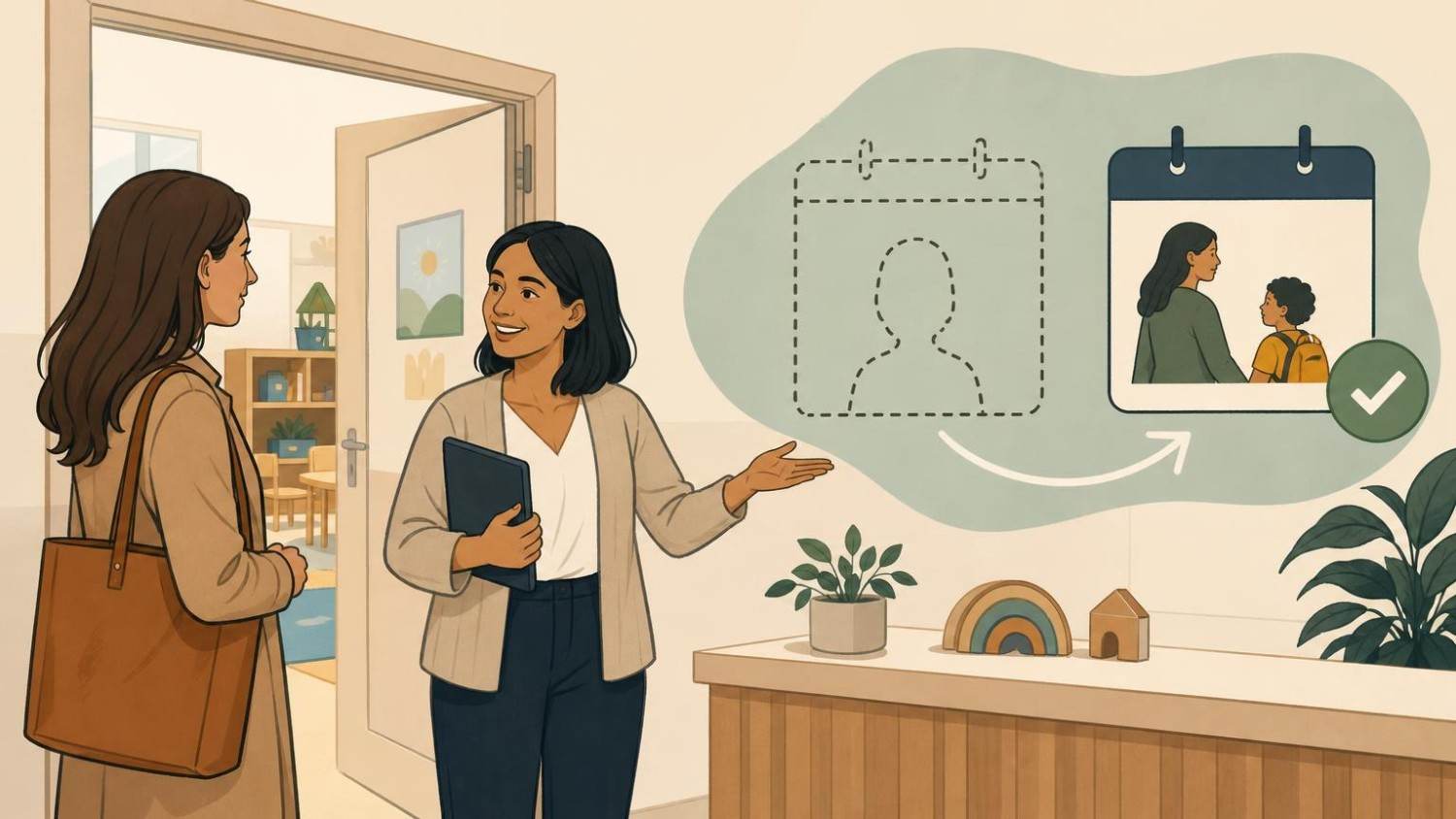
Include a direct scheduling link. Every additional step between reading the email and booking a tour is a place where busy parents drop off. If you can embed a calendar tool that lets them pick a date and time in two clicks, your conversion rate will reflect it.
Leveraging Social Proof and Trust Signals
Parents choosing childcare are making one of the most emotionally charged decisions of early parenthood. They’re entrusting their child’s safety, development, and daily happiness to relative strangers. No amount of facility photos or curriculum descriptions fully addresses the anxiety underneath that decision. Social proof does.
When a parent reads that another family, one that sounds like theirs, had a positive experience at your center, it reduces the perceived risk of enrolling. This is the same psychological mechanism behind reading restaurant reviews or asking friends for pediatrician recommendations. We trust the experiences of people like us more than we trust marketing copy.
Schedule a FREE 30 minutes Session with Us!
Highlighting Recent Parent Testimonials and Success Stories
The word “recent” matters here. A testimonial from 2022 feels stale. Parents want to know what the experience is like right now, in 2026, with the current staff and current programs.
Collect short, specific testimonials from enrolled families and rotate them into your re-engagement emails. The best testimonials mention a specific concern the parent had before enrolling and how it was resolved. “I was nervous about drop-off, but within a week, my daughter was running to her classroom” is infinitely more powerful than “Great center, highly recommend!”
If you have families willing to share brief video testimonials, even better. A 30-second clip of a real parent speaking naturally about their experience carries more weight than paragraphs of written copy. Include these as embedded links in your second or third email in the sequence.
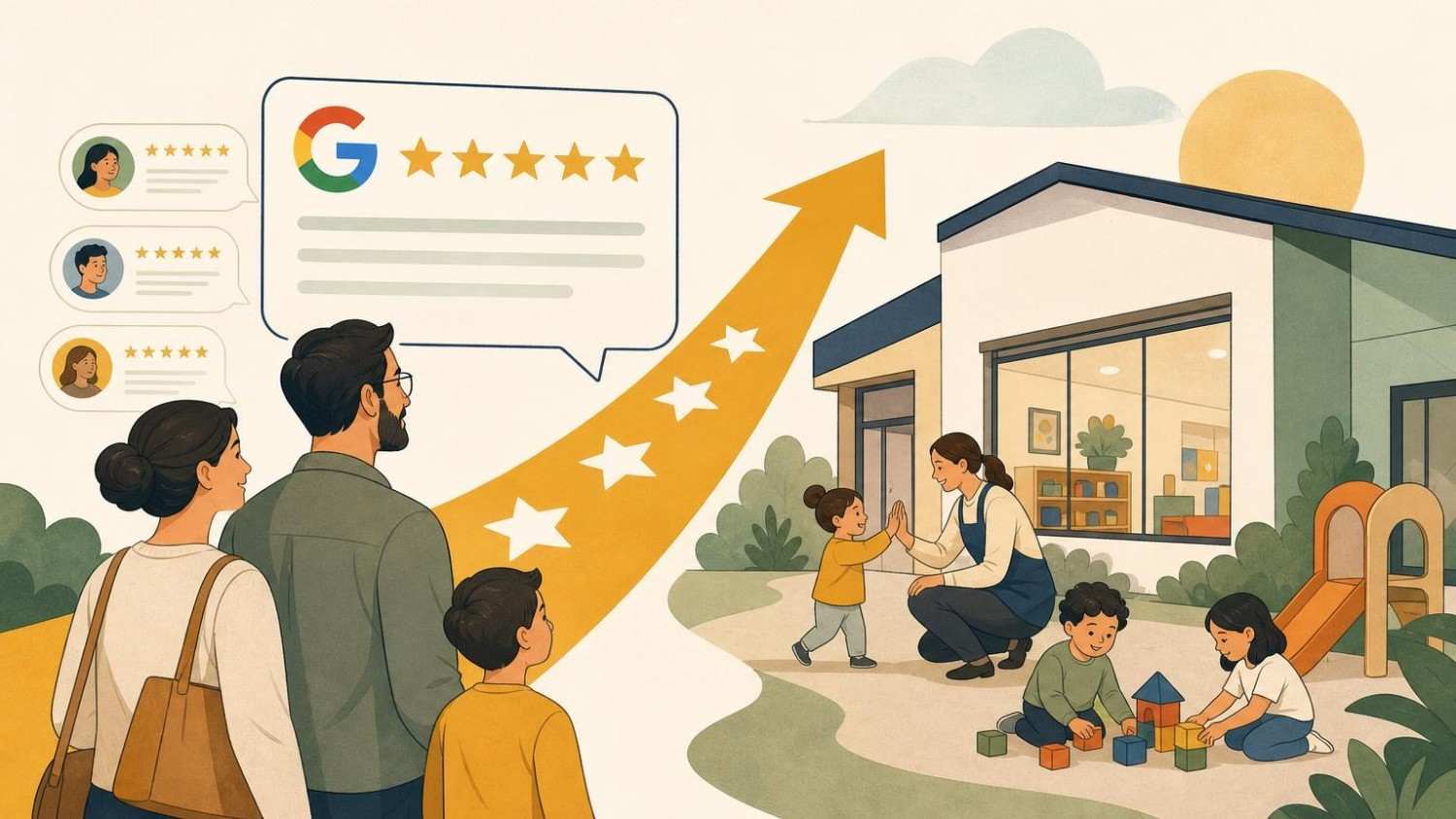
Star ratings from Google or other review platforms also work well as trust signals. If your center has a 4.8-star average across 200+ reviews, put that number in your email. It’s concrete, verifiable, and reassuring.
Optimizing Send Times and Frequency for Families
Timing your re-engagement emails poorly is like calling someone during dinner: even if you have something worthwhile to say, they’re not going to be receptive. Parents of young children have predictable daily rhythms, and your emails should work with those patterns rather than against them.
Data from childcare industry email campaigns consistently shows that Tuesday and Wednesday mornings between 9:30 and 11:00 AM perform best for open rates. This makes intuitive sense: parents have dropped off their kids (or settled them into an activity) and are catching up on email during a brief window of relative calm. Evenings between 8:00 and 9:30 PM, after bedtime routines, are a secondary sweet spot.
For frequency, space your three-email sequence over two to three weeks. Sending all three emails in one week feels aggressive. Waiting a month between emails loses momentum. A cadence of Day 1, Day 7, and Day 18 gives each message room to breathe while keeping your center top of mind.
One important note on frequency: if a lead doesn’t open any of your three emails, don’t keep sending. Repeated emails to unengaged contacts hurt your sender reputation and can land your messages in spam folders for everyone, including engaged leads.
Measuring Success and Cleaning the Lead Database
Running a re-engagement campaign without tracking results is like teaching a class without ever checking if the kids are learning. You need clear metrics to know what’s working, what to adjust, and when to stop investing effort in leads that aren’t coming back.
Defining Key Performance Indicators for Re-Engagement
Focus on four metrics that actually tell you something useful:
- Open rate by segment: Are infant-parent leads opening at higher rates than pre-K leads? This tells you where your messaging resonates and where it needs work.
- Click-through rate: Opens are nice; clicks mean a parent is actively considering your center again. Track which links get clicked most: scheduling tools, testimonial videos, or resource downloads.
- Reply rate: For your check-in email specifically, replies are gold. A parent who writes back “Yes, still looking” is a warm lead ready for a phone call.
- Tour bookings from email: This is the metric that ultimately matters. Track how many tours are booked directly from your re-engagement sequence and how many of those tours convert to enrollment.
Set benchmarks before you launch. Industry averages for re-engagement campaigns hover around 12-15% open rates and 2-3% click-through rates. If your childcare emails beat those numbers, your segmentation and messaging are working.
When to Move a Lead to a Permanent ‘Cold’ List
Not every dormant lead will come back, and that’s fine. The goal of re-engagement emails for dormant childcare leads isn’t a 100% recovery rate; it’s identifying which leads still have potential and gracefully releasing the ones that don’t.
After your three-email sequence, any lead that didn’t open a single email should be moved to a cold list. Don’t delete them entirely: keep them for an annual or semi-annual “last chance” email. But remove them from your active nurture sequences. Leads who opened emails but never clicked or replied can stay on a low-frequency list, receiving perhaps one email per quarter with center updates.
This database hygiene protects your email deliverability, keeps your metrics accurate, and ensures your team’s energy goes toward leads with real potential. A clean list of 200 engaged contacts is worth more than a bloated list of 2,000 that drags down your sender score.
Bringing Dormant Leads Back to Life
The parents on your dormant list once had a real need and chose your center as a possibility. That initial interest hasn’t necessarily disappeared; it’s just been buried under the thousand other decisions parents make every week. A well-structured re-engagement sequence, built on thoughtful segmentation, genuinely useful content, and respectful timing, can resurface that interest at exactly the right moment.
Start by cleaning and segmenting your list this week. Draft your three-email sequence. Test your subject lines with a small group before scaling. Track your results honestly, and don’t be afraid to let go of leads that have truly moved on. The families who re-engage will be worth the effort many times over, and your enrollment pipeline will be stronger for it.

Share